
Drilling for oil
Drilling for oil
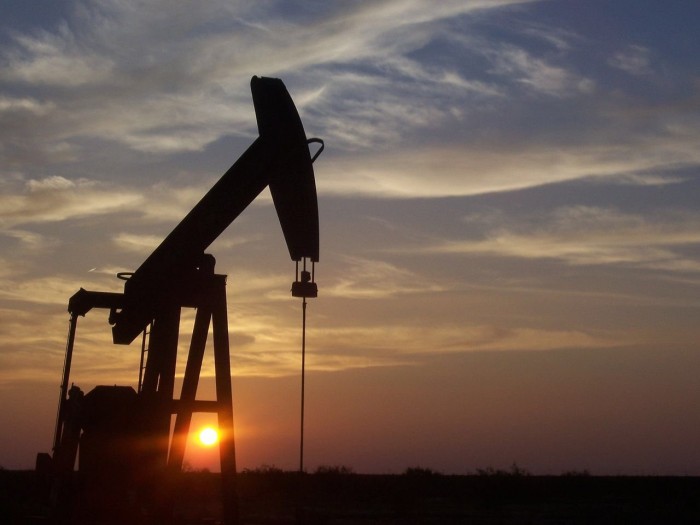
Oil drilling
An oil well is a borehole drilled into the Earth to extract petroleum hydrocarbons. Typically, natural gas is also released during oil production. A well specifically intended for gas extraction is referred to as a gas well.
Oil history
The earliest documented oil wells were drilled in China in 347 CE, reaching depths of approximately 240 metres (790 ft) using bits affixed to bamboo poles.[1] The extracted oil was utilized by burning it to evaporate brine and produce salt. By the 10th century, extensive bamboo pipelines connected oil wells to salt springs. Ancient Chinese and Japanese records frequently reference the use of natural gas for lighting and heating purposes. In Japan, petroleum was referred to as "Burning water" as early as the 7th century.
According to Kasem Ajram, petroleum distillation was pioneered by the Persian alchemist Muhammad ibn Zakarīya Rāzi (Rhazes) in the 9th century, yielding substances such as kerosene through the use of the alembic (al-ambiq),[3][verification needed] primarily employed in kerosene lamps. Arab and Persian chemists also distilled crude oil to produce flammable materials for military applications. This knowledge of distillation spread to Western Europe via Islamic Spain by the 12th century.
Some sources indicate that from the 9th century onwards, oil fields near present-day Baku, Azerbaijan, were exploited to produce naphtha for the petroleum industry. These sites were described by Marco Polo in the 13th century, who noted the production of oil in quantities sufficient to fill hundreds of shiploads. During his visit to Baku in 1264, located on the shores of the Caspian Sea, Marco Polo observed oil being collected from natural seeps, writing that "on the confines toward Geirgine there is a fountain from which oil springs in great abundance, in as much as a hundred shiploads might be taken from it at one time."
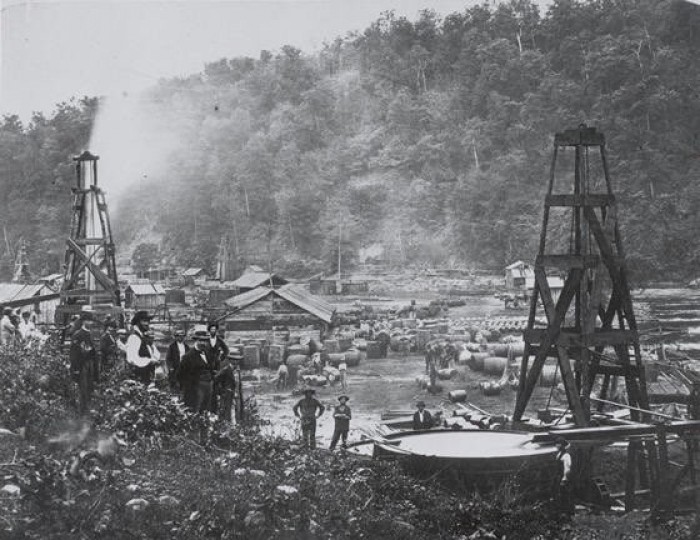
Oil drilling history
